

Explore Greece like you’re starring in The Odyssey
-
 Nancy
Nancy - Published on Jul 24, 2026
 Nancy
Nancy 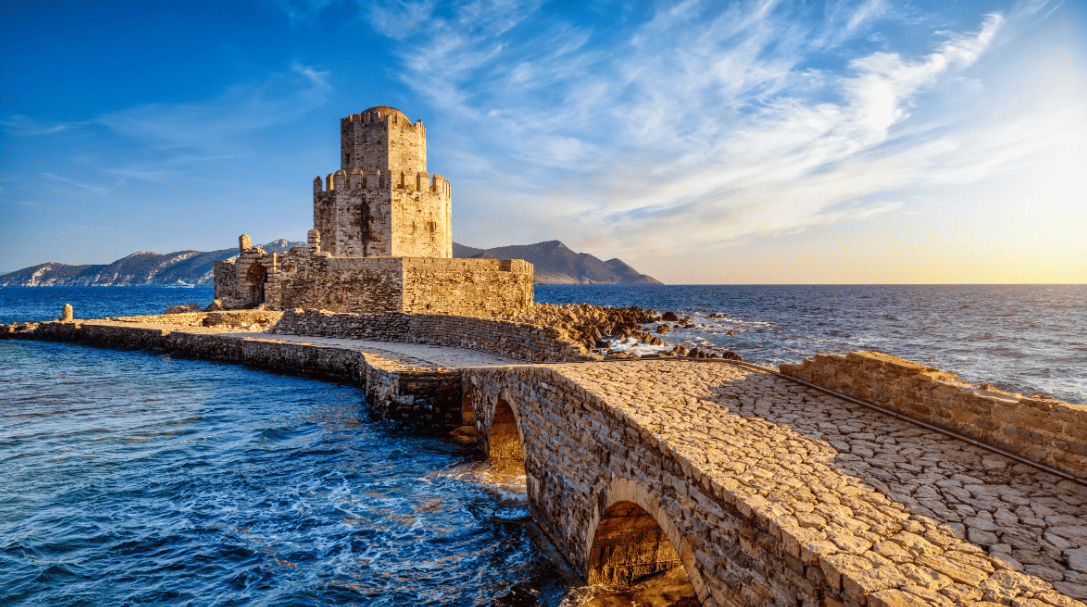
Contents
- 1. Experience Odysseus’ homecoming in Ithaca
- 2. Sail through the Ionian Islands like a modern Odysseus
- 3. Follow The Odyssey film trail through Messenia
- 4. Enter the Greek underworld along the Acheron River
- 5. Travel from Athena’s Athens to Poseidon’s Cape Sounion
- 6. Recreate Homeric hospitality in a Messinian olive grove
- Hop on an Odysseus journey through Greece
Christopher Nolan’s The Odyssey brings Homer’s epic to life through dramatic seascapes, caves, ancient fortresses, and mythic landscapes. Travellers looking to explore The Odyssey locations in Greece can go beyond a conventional film tour with a journey combining sailing, archaeology, mythology, and cuisine. From Ithaca to Messenia, these six experiences offer an atmospheric way to follow in the footsteps of Odysseus.
1. Experience Odysseus’ homecoming in Ithaca
Every storm, temptation, and encounter in The Odyssey leads towards one destination: Ithaca. Traditionally recognised as Odysseus’ kingdom, the Ionian island remains the emotional centre of Homer’s story.
Although another Mediterranean island was used to portray Ithaca in Nolan’s production, the real island offers a deeper link to the epic through its forested hills, sheltered bays, and quiet coastal villages.
A private Ithaca itinerary might include:
- Walking around Vathy and its natural harbour
- Visiting Stavros and its archaeological collection
- Exploring sites traditionally associated with Odysseus
- Cruising to secluded beaches and sea caves
- Dining beside the harbour at sunset
The island reflects the Homeric idea of nostos, meaning homecoming. It is not simply where Odysseus’ journey ends, but the home he continues to value after years of adventure, hardship, and temptation.
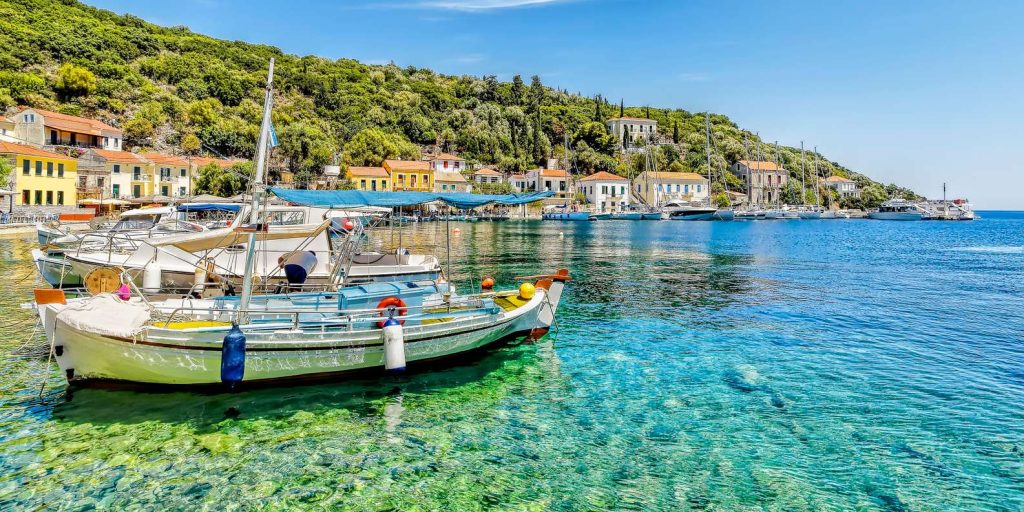
Experience Odysseus’ homecoming experience.
2. Sail through the Ionian Islands like a modern Odysseus
Few experiences capture the spirit of The Odyssey as naturally as travelling by sea. Odysseus’ journey is shaped by unpredictable winds, unknown shores, and the uncertainty of what lies beyond the horizon.
A private yacht charter retains that sense of movement while replacing mythical dangers with secluded anchorages, personalised service, and flexible itineraries.
Rather than linking each island to a specific episode in Homer’s poem, the route captures the maritime spirit of The Odyssey through limestone cliffs, sea caves, fishing villages, and secluded bays.
Days at sea may include:
- Swimming in bays inaccessible by road
- Kayaking and paddleboarding along the coastline
- Enjoying lunch prepared on board
- Visiting harbour villages
- Dining at waterfront restaurants
- Watching the sunset from the deck
- Spending the night in peaceful anchorages
3. Follow The Odyssey film trail through Messenia
Messenia provides one of the strongest connections between Homeric history and Nolan’s cinematic interpretation. The production filmed across the region, using its caves, olive groves, beaches, and fortresses to recreate parts of Odysseus’ world.
A private route could connect Pylos, the Palace of Nestor, Voidokilia Beach, Nestor’s Cave, and Methoni Castle.
- Begin in Pylos: Use the waterfront town as a relaxed base for exploring western Messenia, with private boat trips and coastal excursions across the Bay of Navarino.
- Discover the Palace of Nestor: Explore one of Greece’s best-preserved Mycenaean palace complexes with an archaeologist. The ruins and Linear B tablets reveal how this important Bronze Age centre was organised.
- Walk above Voidokilia Beach: Combine time on the horseshoe-shaped beach with a walk through the surrounding dunes and hills. A nearby trail leads towards Nestor’s Cave, used as the Cyclops’ home in the film.
- End at Methoni Castle: Visit the dramatic seaside fortress with stone walls, Ionian views, and a striking coastal setting.
Messenia brings together filming locations, Homeric associations, and genuine archaeological history, making it an essential destination for travellers who want to explore The Odyssey locations in Greece.
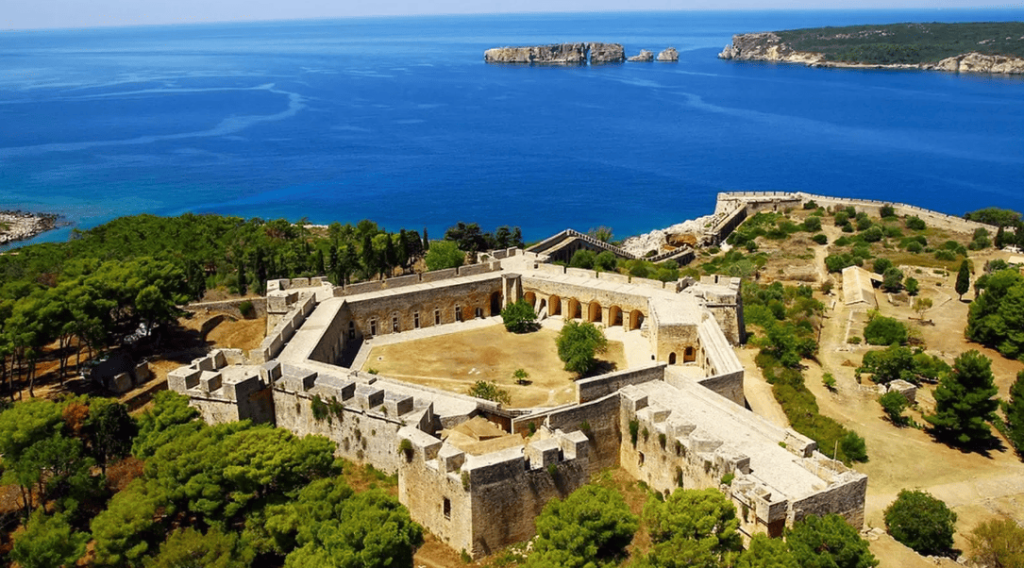
Discover the history of the Palace of Nestor.
4. Enter the Greek underworld along the Acheron River
The Acheron River in Epirus introduces a darker side of Greek mythology. In ancient tradition, the river was associated with the boundary between the worlds of the living and the dead.
Near its banks stands the Nekromanteion of Acheron, an archaeological site was historically used for communication with the underworld. Together, the river and sanctuary create an atmospheric setting for exploring Odysseus’ descent into the realm of the dead.
The experience can be as adventurous or reflective as preferred:
- Walk through shallow sections of the river
- Kayak or raft through the surrounding landscape
- Visit the Nekromanteion with a private guide
- Hike through the forests near the river springs
- Stay in nearby Parga
- Continue by private boat to Paxos and Antipaxos
5. Travel from Athena’s Athens to Poseidon’s Cape Sounion
Athena and Poseidon represent opposing forces in Odysseus’ journey. Athena protects and guides him, while Poseidon repeatedly delays his return across the sea.
Their rivalry inspires a private route from central Athens to Cape Sounion, beginning with a mythology-led visit to the Acropolis focused on Athena, the city’s patron goddess.
Continue along the Athenian Riviera to the Temple of Poseidon. Perched above the Aegean, the sanctuary is especially atmospheric at sunset and strongly evokes the god who challenged Odysseus’ homecoming.
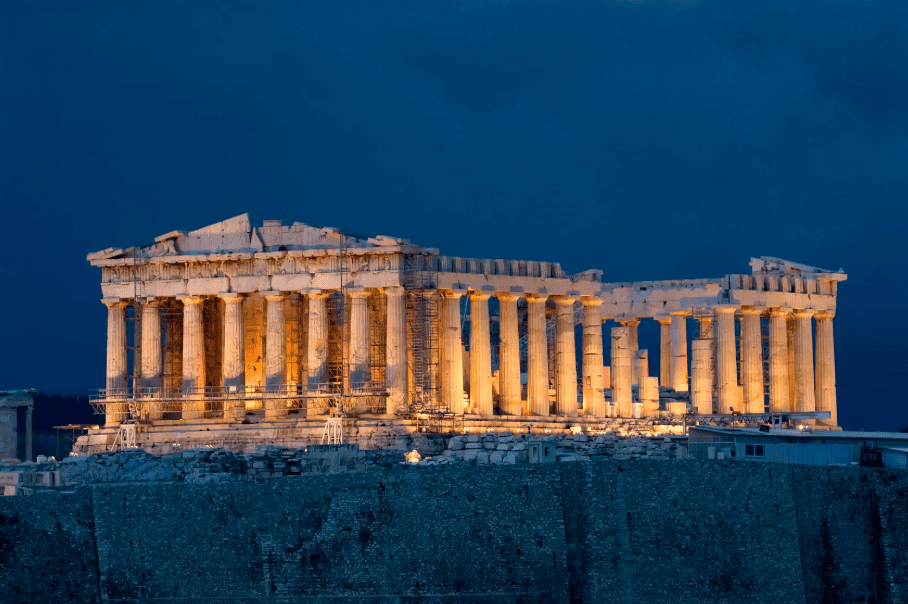
Explore the Acropolis through the myths of Athena.
6. Recreate Homeric hospitality in a Messinian olive grove
The Odyssey is not only a story of shipwrecks, gods, and monsters. Hospitality plays a central role in determining which characters are civilised, trustworthy, and deserving of protection.
The ancient Greek concept of xenia described the sacred relationship between a host and a guest. Throughout the epic, some characters welcome Odysseus with food, shelter, and gifts, while others violate the rules of hospitality with serious consequences.
A private meal in a Messinian olive grove provides a peaceful way to experience this theme. The afternoon might begin with a walk through the trees before continuing with:
- An olive oil tasting
- A private Greek cooking class
- Local cheeses, bread, herbs, and seasonal produce
- Messinian wine
- A long outdoor lunch
- Traditional music or mythological storytelling
The aim is to capture the social meaning of a Homeric dining experience: welcoming travellers, sharing food, exchanging stories, and allowing the meal to unfold without being rushed.
Hop on an Odysseus journey through Greece
An itinerary inspired by Homer does not need to follow one fixed route. Travellers can combine several days aboard a private yacht through the Ionian Islands, a coastal stay in Ithaca, mythology-led experiences in Athens, and an adventurous extension to the Acheron River.
Private arrangements may include:
- Luxury hotels, villas, and coastal retreats
- Yacht charters through the Ionian Islands
- Chauffeur services
- Archaeologists and mythology guides
- Private dining experiences
- Bespoke itineraries
MA Hospitality Group can design a personalised journey to explore The Odyssey locations in Greece, connecting mythology, cinema, history, and private travel. Contact us to plan your own voyage in the spirit of Odysseus!


 nana
nana