


Davis Cup Final 8 2026: Draw, schedule, and teams to watch in Bologna
-
 Nancy
- Published on Oct 12, 2026
 Nancy

Contents
- Davis Cup Final 8 2026 draw
- Davis Cup Final 8 2026 schedule
- Teams to watch at the Davis Cup Final 8 2026
- Italy – Can the champions make it four in a row?
- Spain – Looking to go one step further
- Germany – Strength across singles and doubles
- Czechia – A contender tested under pressure
- Great Britain – A return built on team depth
- The quarter-finals that could shape the tournament
- Why the Davis Cup Final 8 feels different from regular tour tennis
- Experience the Davis Cup Final 8 with MA Hospitality Group
The Davis Cup Final 8 2026 brings eight nations to the SuperTennis Arena in Bologna from 24–29 November, with the draw and schedule now confirmed. Italy returns as host and three-time defending champion, while Spain seeks to improve on its runner-up finish in 2025. With established contenders, returning challengers, and a debut appearance for South Korea, the competition promises six days of knockout tennis with national pride at stake.
Davis Cup Final 8 2026 draw
The Davis Cup Final 8 draw places Italy and Spain in opposite halves, leaving open the possibility of a repeat of last year’s final. Germany and Czechia complete the four seeded teams, but both face opponents with significant Davis Cup experience.
| Draw half | Quarter-final |
|---|---|
| Top half | Italy (1) vs South Korea |
| Top half | Czechia (4) vs Canada |
| Bottom half | Great Britain vs Germany (3) |
| Bottom half | Austria vs Spain (2) |
Numbers in parentheses indicate seedings.
Davis Cup Final 8 2026 schedule
For guests following a particular nation, the quarter-finals offer the clearest starting point for planning a visit. Later-round appearances depend on results, so a finals-weekend booking should be chosen for the occasion rather than the expectation of seeing a specific team.
| Date | Stage | Tie | Start time |
|---|---|---|---|
| Quarter-final | Czechia vs Canada | 16:00 | |
| Quarter-final | Italy vs South Korea | 16:00 | |
| Quarter-final | Great Britain vs Germany | 10:00 | |
| Quarter-final | Austria vs Spain | Not before 17:00 | |
| Semi-final | Italy / South Korea winner vs Czechia / Canada winner | 16:00 | |
| Semi-final | Great Britain / Germany winner vs Austria / Spain winner | 12:00 | |
| Final | Semi-final winners | 15:00 |
All times are local to Bologna (CET). Schedule subject to change. Listed times indicate the start of each tie, not individual singles or doubles matches.
Teams to watch at the Davis Cup Final 8 2026
Among the eight Davis Cup Final 8 teams, these five bring particularly compelling stories through their recent results, seeding, and route through the draw. Individual player appearances will depend on final squad nominations and matchday selections.
Italy – Can the champions make it four in a row?
Italy arrives with the strongest recent record, having won the competition in 2023, 2024, and 2025. Last year’s 2–0 final victory over Spain completed a hat-trick of titles, and Bologna gives the defending champions another opportunity to compete at home.
The attraction is not simply whether Italy can win again, but how it handles the expectation. A fourth consecutive title would extend an exceptional run, while every challenger has the added motivation of ending it.

Italy won the competition in 2023, 2024, and 2025.
Spain – Looking to go one step further
Spain enters as the No. 2 seed after finishing runner-up in 2025. Its quarter-final against Austria begins a route that could lead through Germany or Great Britain before a potential final against Italy.
For Spain, the challenge is to turn recent final experience into another title. Its position in the opposite half from Italy gives that possibility a clear narrative, but the immediate task is more practical: winning the opening tie without looking too far ahead.
Germany – Strength across singles and doubles
Third seed Germany secured its place with a 3–1 qualifying victory over Croatia. Alexander Zverev won both of his singles matches, while Kevin Krawietz and Tim Pütz contributed the doubles point. That combination demonstrated why Germany deserves attention beyond the presence of one headline player.
The same balance could be valuable in Bologna. Strong singles performances can establish control, but a reliable doubles partnership becomes particularly important when the opening matches are split.
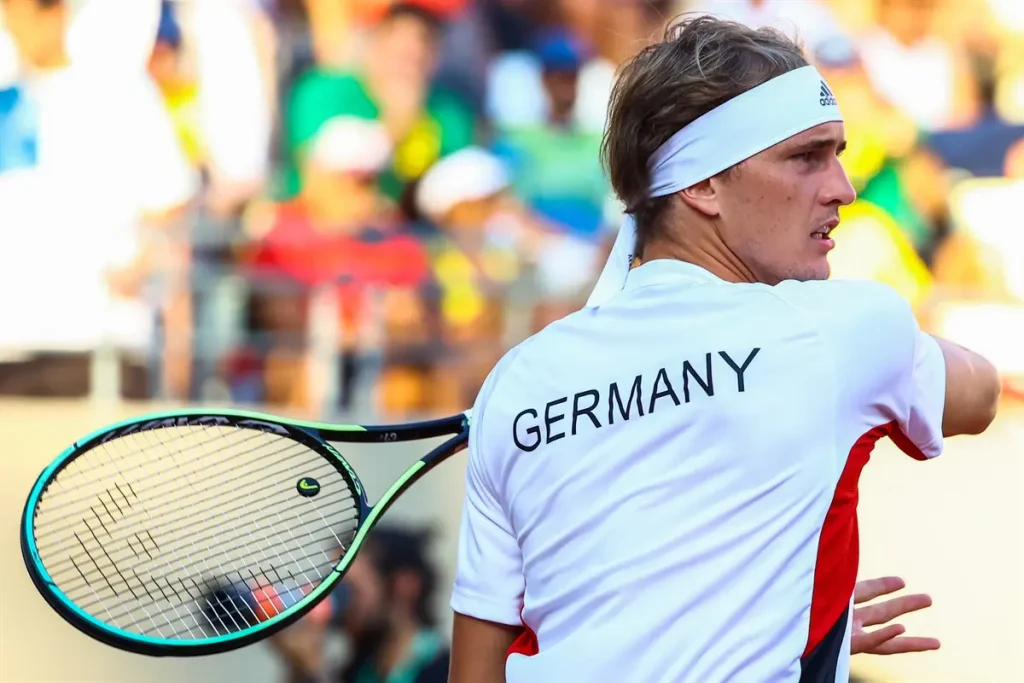
Alexander Zverev from the Germany team won both of his singles matches.
Czechia – A contender tested under pressure
Czechia earned its place through a 3–2 qualifying victory over the United States and entered Bologna as the fourth seed. Its opening opponent, Canada, won the Davis Cup in 2022, making this a demanding start rather than a comfortable reward for seeding.
The Czech team’s appeal lies in its ability to compete through a closely contested tie. Having already survived a narrow qualifying encounter, it offers an interesting challenge to the more obvious title contenders.
Great Britain – A return built on team depth
Great Britain returns to the Final 8 for the first time since 2023 after defeating Ecuador 4–0. Henry Patten and Neal Skupski secured the decisive doubles point, underlining the importance of that discipline to Britain’s campaign.
For Britain, the key question is whether its singles players can put the team in a position where its doubles strength becomes decisive.
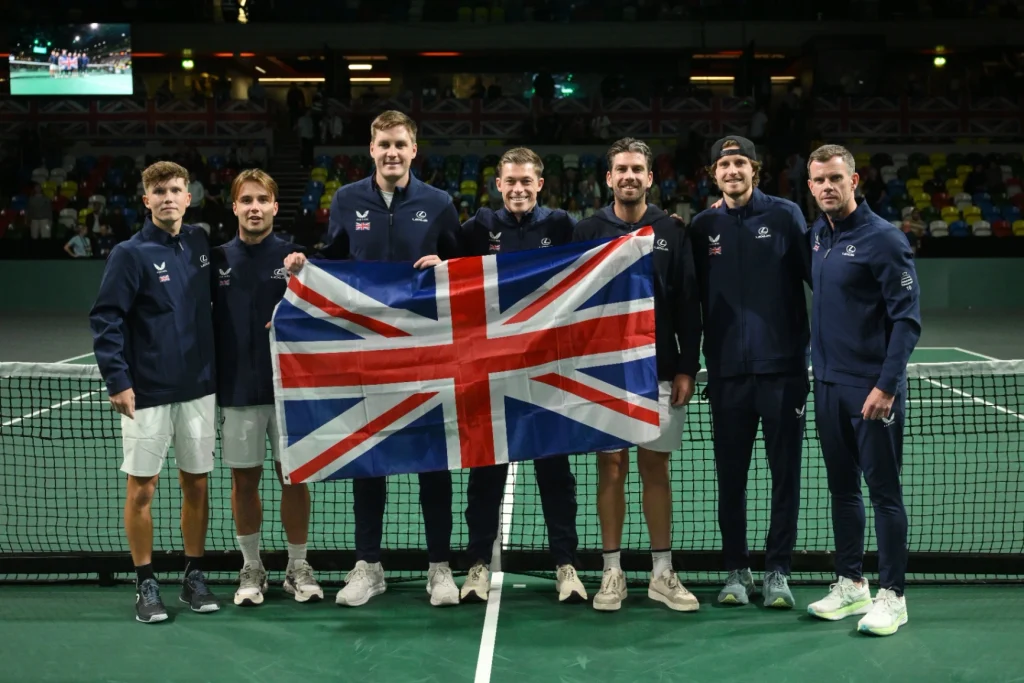
Great Britain returns to the Final 8 for the first time since 2023.
The quarter-finals that could shape the tournament
Great Britain vs Germany stands out as a tie with recent knockout history: Germany won their quarter-final meeting 2–1 in 2021. That adds another layer to a contest in which the balance between singles and doubles could be crucial.
Czechia vs Canada offers something different: the countries have never met in an official Davis Cup tie. Canada’s return after missing the 2025 Final 8 gives the opening day an additional storyline, while the winner could earn the opportunity to challenge Italy in the semi-finals.
The other quarter-finals carry their own contrasts. Italy faces Final 8 debutants South Korea, while Austria has the opportunity to upset second seed Spain. For the seeded teams, the danger is treating those matches as steps towards a later showdown rather than decisive contests in their own right.
Why the Davis Cup Final 8 feels different from regular tour tennis
At the Davis Cup Final 8, players compete for their countries rather than solely for individual results. Each tie consists of two singles matches followed by doubles if required, with the first nation to win two matches advancing. Unlike a group stage, a lost tie ends the team’s tournament.
That structure changes how spectators follow the action. An opening singles defeat does not end the contest, and a victory in the second match can shift all the pressure onto doubles. The focus moves from one player’s performance to how the entire team responds.
For visitors, the appeal is watching that story unfold within a single session. The stakes are easy to understand: two nations arrive with a chance to progress, but only one leaves with its title hopes intact.
Experience the Davis Cup Final 8 with MA Hospitality Group
For guests seeking Davis Cup hospitality, the Volée package combines lower-bowl seating with access to The 1900 Club, an open bar, buffet, and dedicated staff. Access applies to the selected session, including its two singles matches and a possible deciding doubles match.
MA Hospitality Group can assist with Davis Cup Final 8 tickets and hospitality enquiries, alongside luxury accommodation, private transfers, dining reservations, and tailored Bologna experiences. Whether following a national team or attending finals weekend, the trip can be planned around your preferred sessions and time in the city.
Contact us to plan your Davis Cup 2026 experience in Bologna.