

BTS, Madonna, Shakira and Justin Bieber Ignite the World Cup 2026 Halftime Show
-
 nana
nana - Published on Jul 21, 2026
 nana
nana 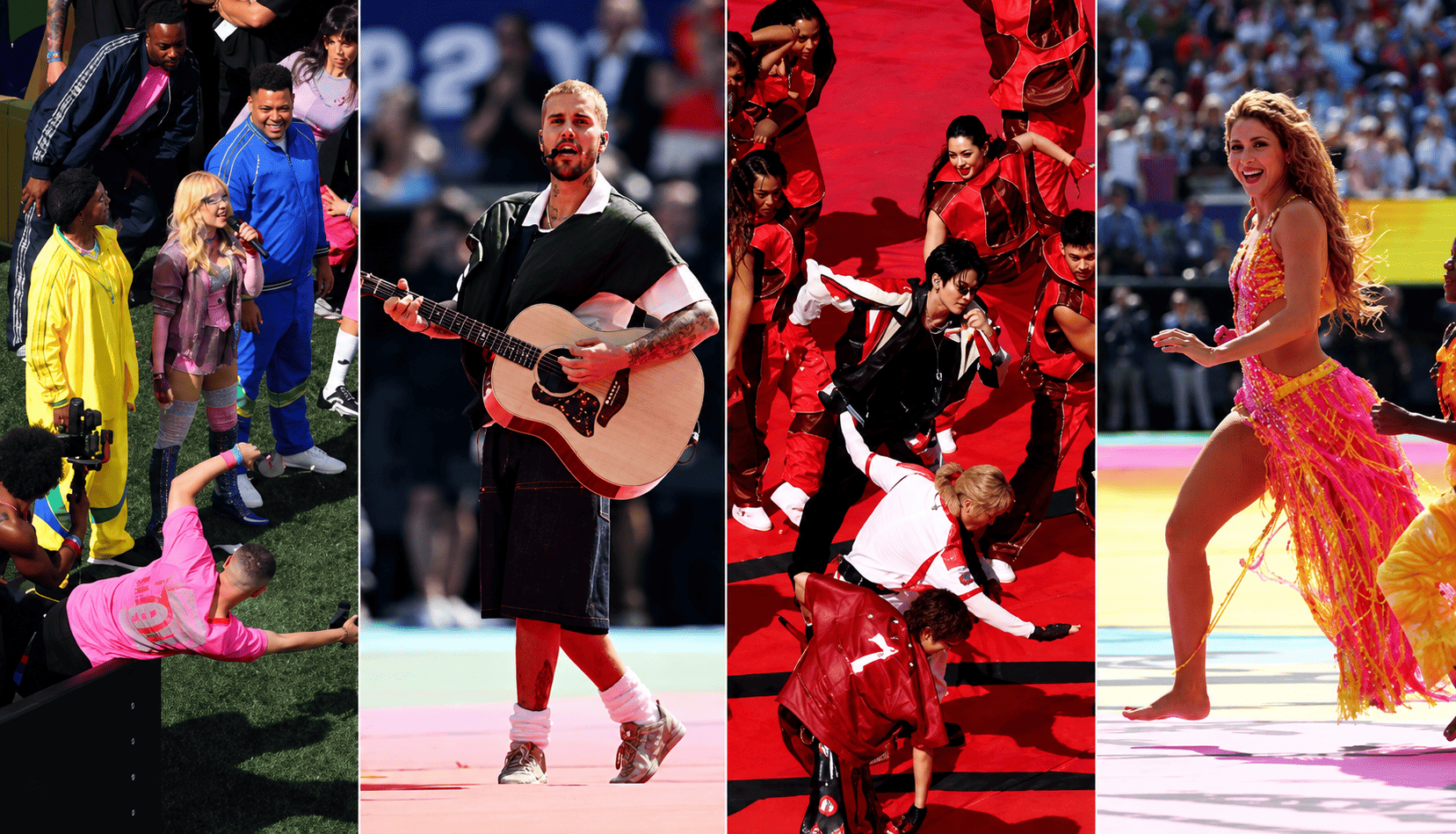
Contents
- The First World Cup Final Halftime Show Combined Entertainment With Global Impact
- Madonna Opened the Show With Ronaldo and Ronaldinho
- Gustavo Dudamel and the Muppets Reimagined “Seven Nation Army”
- BTS Brought “Dynamite” Live to the World Cup Stage
- Justin Bieber Turned “Everything Hallelujah” Into a World Cup Song
- Shakira and Burna Boy Delivered the Final Headliner Peak
- Chris Martin, Coldplay and PS22 Chorus United the Full Cast
- A Historic Spectacle That Divided Football Fans
The World Cup final briefly stepped away from football and entered a new era of global entertainment on 19 July 2026. With Spain and Argentina level at half-time, the pitch at New York New Jersey Stadium was transformed into a stage for Madonna, BTS, Justin Bieber, Shakira, Burna Boy and a long list of surprise guests.
The entire World Cup 2026 halftime show lasted just 11 minutes. With the main headline turns limited to approximately two minutes each, and some running closer to one minute and 45 seconds once transitions were considered, every artist had to create an immediate impact. The result was a fast-moving production that combined pop music, K-pop, Afrobeats, football icons, children’s voices and the Muppets in one tightly compressed spectacle.
The First World Cup Final Halftime Show Combined Entertainment With Global Impact
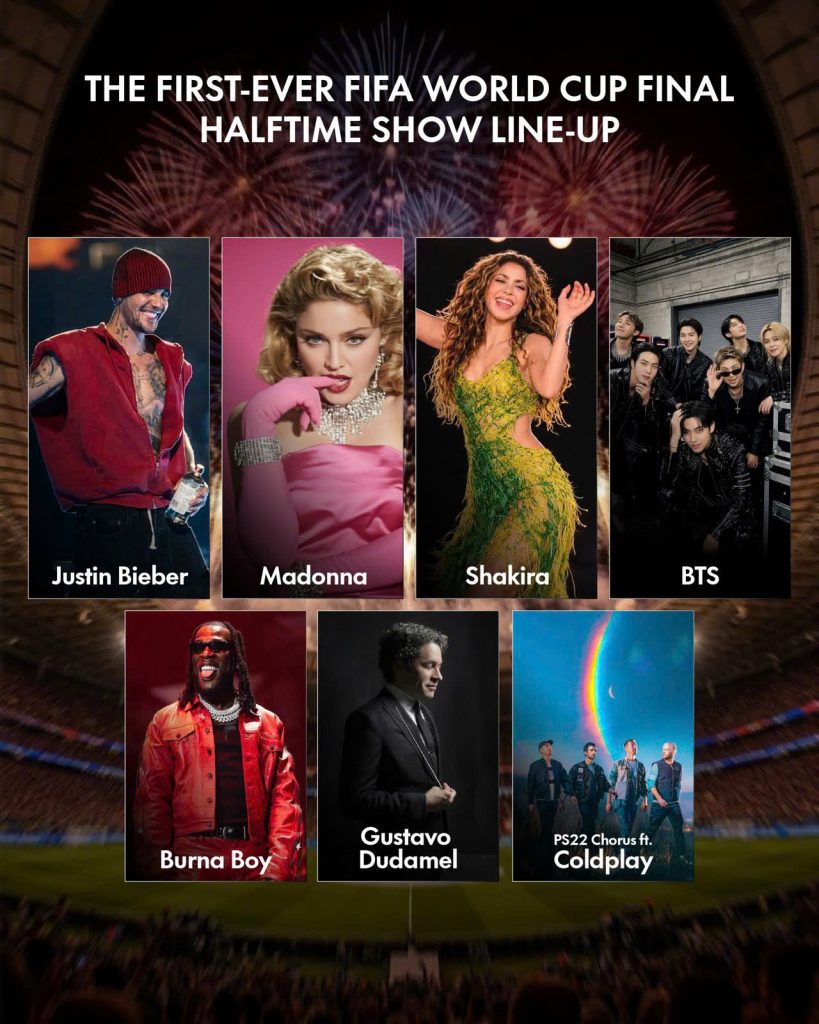
The World Cup 2026 halftime show introduced a new chapter for football entertainment as the first official halftime production ever staged during a FIFA World Cup final. Inspired by the scale and fast-paced structure of the Super Bowl, the 11-minute spectacle transformed the central pitch into a global stage for Madonna, Justin Bieber, BTS, Shakira and hundreds of supporting performers. Global Citizen produced the show alongside Live Nation and Done + Dusted, with Coldplay frontman Chris Martin serving as curator.
More than 350 musicians, dancers, football icons and entertainment figures appeared throughout the World Cup final halftime show. With numerous artists sharing such a limited running time, the production focused on rapid transitions and instantly recognisable moments rather than complete concert sets. Each headliner received enough time for one signature performance, giving the World Cup halftime show recap a fast-moving structure that extended from Madonna’s opening appearance to the BTS World Cup halftime show, Justin Bieber’s acoustic interlude and the closing Shakira World Cup performance.
Beyond its Super Bowl-style production, the event supported the FIFA Global Citizen Education Fund, which aims to raise more than USD 100 million for education and community football initiatives worldwide. By the final, the campaign had surpassed USD 60 million, supported by FIFA’s contribution of USD 1 from every tournament ticket sold. Funding had already reached 58 community organisations across 20 countries, benefiting approximately 400,000 children, while every participating artist donated their time to help turn the historic show into both an entertainment spectacle and a global fundraising platform.
World Cup 2026 halftime show
Madonna Opened the Show With Ronaldo and Ronaldinho
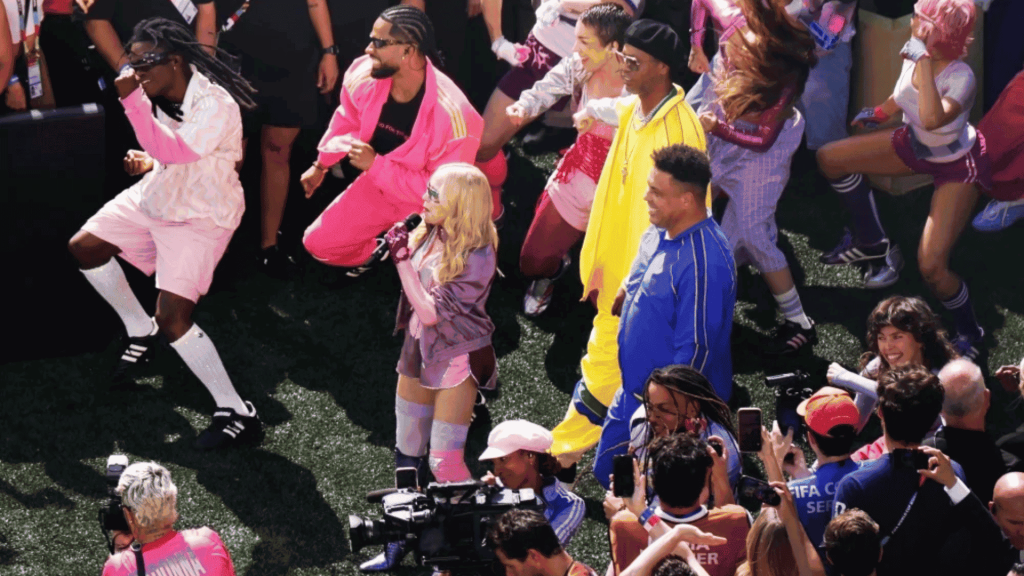
Madonna introduced the new format with an entrance that immediately connected music and football. Brazilian legends Ronaldo Nazário and Ronaldinho drove her through the stadium tunnels in a dune buggy before joining her on the pitch.
She opened with a reworked version of her 2000 hit “Music”, incorporating elements of “Disco Inferno” and “Danceteria”. The image of the Queen of Pop arriving alongside two World Cup winners gave the show its clearest opening statement: football history and popular culture were now sharing the same stage.
Madonna’s appearance lasted only around two minutes, yet the entrance ensured that the opening became one of the show’s most photographed moments.
Madonna Opened the Show With Ronaldo and Ronaldinho
Gustavo Dudamel and the Muppets Reimagined “Seven Nation Army”
Rather than moving directly from one pop headliner to another, the show shifted into an orchestral interpretation of “Seven Nation Army”, one of football’s most familiar stadium chants.
Venezuelan conductor Gustavo Dudamel led musicians from the New York Philharmonic and Venezuela’s Simón Bolívar Symphony Orchestra. Iranian violinist Bijan Mortazavi joined the arrangement, while the Muppets’ Electric Mayhem added a playful visual layer, including Animal behind the drums.
The section served as more than a transition. It connected the show directly to football culture before the arrival of BTS and marked one of the production’s more unexpected combinations.
BTS Brought “Dynamite” Live to the World Cup Stage
BTS followed with a football-inspired stadium performance of “Dynamite”, combining vocals, coordinated choreography and new lyrical references created for the occasion. The seven members appeared in variations of red and black, while details within their styling referenced both BTS and South Korean football culture.
Shortly before the performance, Global Citizen shared a video featuring BTS inviting viewers to watch the historic show. The clip placed the group’s global ARMY fanbase at the centre of the build-up and reflected the anticipation surrounding their appearance.
Once on the pitch, BTS delivered the most choreography-led section of the night. Their short set included football-themed changes to the lyrics, including references to kicking the ball and playing the game. The limited slot did not allow for a full version of “Dynamite”, but the performance still carried the scale and precision expected from a BTS stadium appearance.
Afterwards, the group thanked ARMY around the world for helping them reach the stage. BTS described performing for a cause centred on love, children and education as feeling “like a dream”, while recognising the significance of appearing in the first halftime show held during a World Cup final.
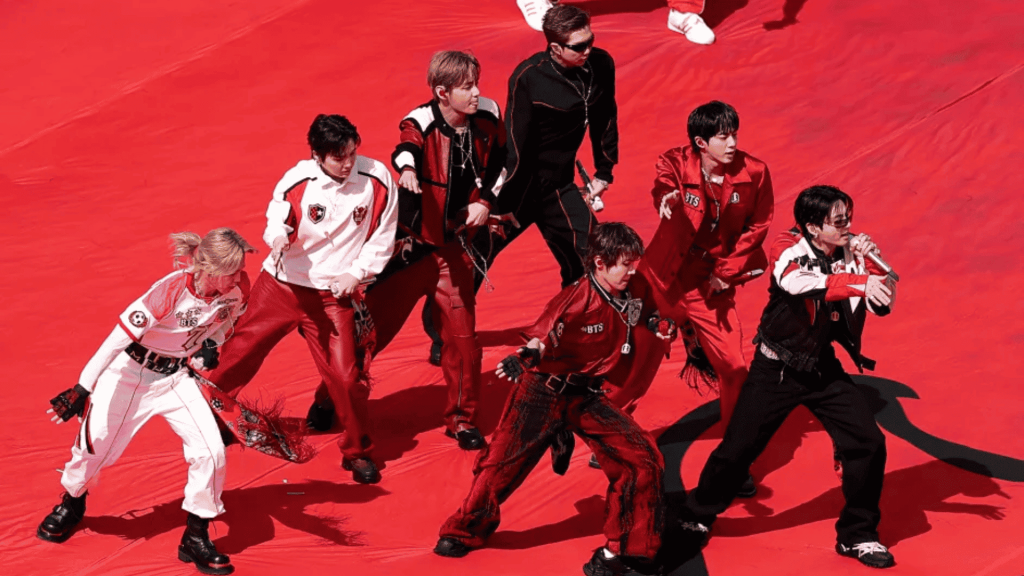
BTS World Cup halftime show
Justin Bieber Turned “Everything Hallelujah” Into a World Cup Song
Jason Sudeikis and Brendan Hunt appeared in character as Ted Lasso and Coach Beard to introduce Justin Bieber, creating a brief comedy segment before the show changed pace.
Standing with an acoustic guitar, Bieber performed a stripped-back version of “Everything Hallelujah”. His section offered a deliberate contrast to the movement and choreography of BTS, bringing a quieter, more intimate tone to a stadium filled with tens of thousands of spectators.
Bieber also adjusted the song for the occasion. Towards the end, “Everything Hallelujah” became “World Cup Hallelujah”, giving the performance a direct connection to the final rather than presenting the original track without alteration.
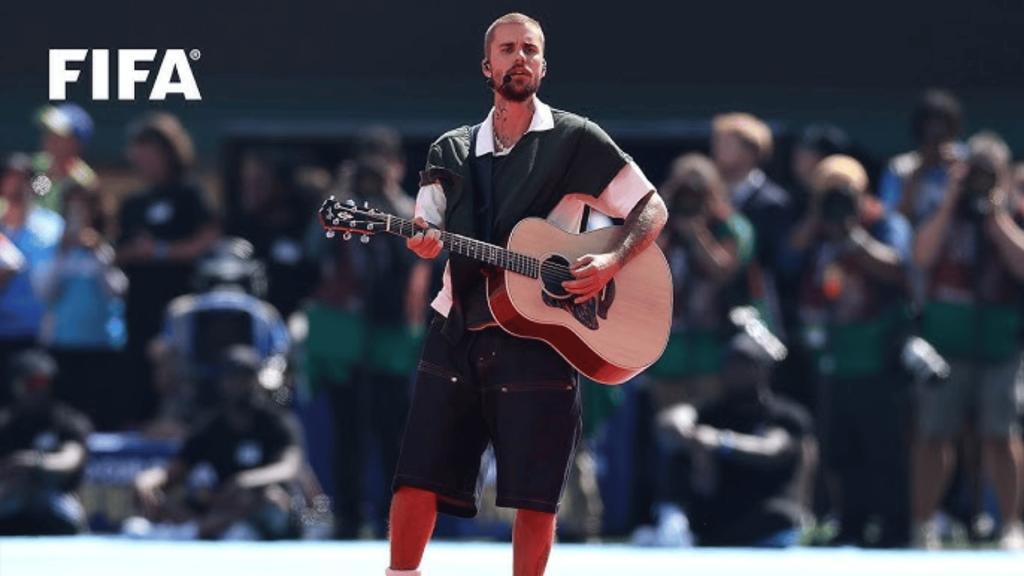
Justin Bieber Turned “Everything Hallelujah” Into a World Cup Song
Shakira and Burna Boy Delivered the Final Headliner Peak
Shakira and Burna Boy followed with “Dai Dai”, the official song of the 2026 tournament. They were joined by Uganda’s Ghetto Kids, bringing Afrobeats rhythms, large-scale choreography and a brighter visual palette to the final main headliner section.
For Shakira, the performance felt like the latest chapter in a relationship with the World Cup that stretches across several tournaments. From “Waka Waka” in 2010 to her appearances at both the opening ceremony and final in 2026, few artists have become as closely associated with football’s largest international stage.
She therefore closed the co-headliner sequence in a position that suited her long-standing reputation as the queen of World Cup performances. However, “Dai Dai” was not the end of the overall production.
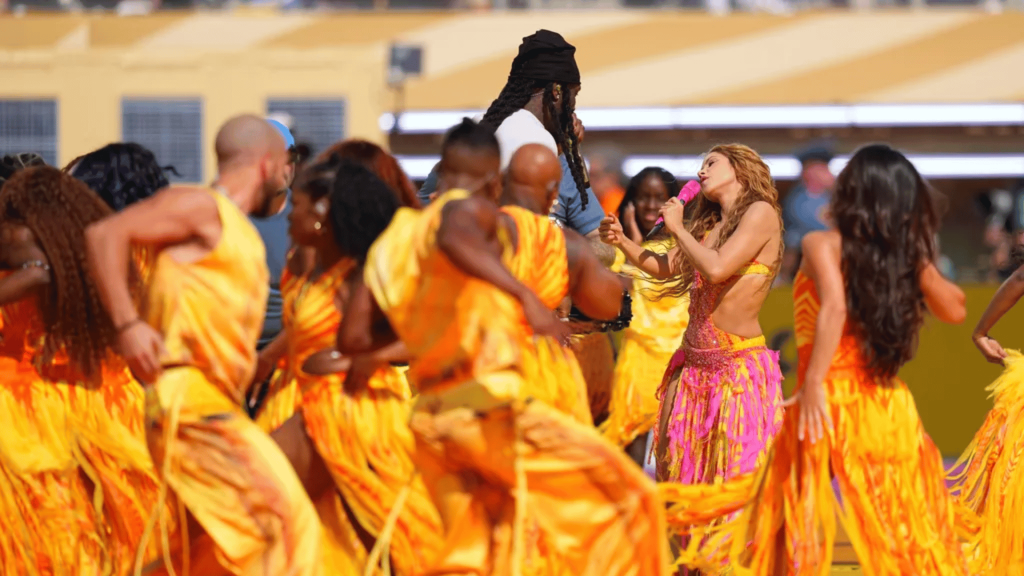
Shakira World Cup performance
Chris Martin, Coldplay and PS22 Chorus United the Full Cast
The final section moved away from individual star turns and brought the show’s wider message into focus.
The PS22 Chorus from Staten Island debuted “We Dance”, an original song written by Coldplay for the occasion. The children were joined by Coldplay, Emmanuel Kelly, characters from Sesame Street and the Muppets, along with returning performers from earlier in the show. Adriana Lima also made a cameo during the finale.
As fireworks illuminated the stadium, the performance centred on ideas of love, unity and collective action. The screens promoted the newly launched Believe in Love initiative, which encourages small actions intended to address poverty and environmental challenges.
This collective ending helped the production feel less like a sequence of unrelated celebrity appearances. It connected Madonna’s opening, BTS’s global reach, Bieber’s acoustic moment and Shakira’s World Cup legacy to the social campaign behind the event.
A Historic Spectacle That Divided Football Fans
The compressed schedule was both the show’s strength and its principal limitation. Eleven minutes allowed FIFA to create a continuous stream of recognisable faces and viral moments, but no headliner had enough time to develop a complete performance.
Madonna delivered the strongest entrance, BTS brought the most precise choreography, Justin Bieber changed the atmosphere, and Shakira provided the clearest connection to the tournament’s musical history. The Muppets, orchestras and children’s chorus added a less predictable dimension, although the number of participants occasionally made the production feel crowded.
Whether the Super Bowl model belongs in football will remain open to debate. However, the first World Cup 2026 halftime show demonstrated that the modern World Cup 2026 final is no longer presented solely as a match. It has become a global cultural occasion bringing together elite sport, music, fashion, entertainment and social impact.
For clients planning ahead for the world’s leading sporting and entertainment occasions, MA Hospitality Group provides premium event access, luxury accommodation, private transportation and tailored travel support. From major finals to international concerts, the World Cup 2026 halftime show reflects the type of global experience that now extends far beyond the main event.


 Nancy
Nancy